
Introduction
Phone calls are still one of the most powerful ways to connect with customers. Whether it’s answering inquiries, qualifying leads, booking appointments, or following up, calls play a critical role in business communication.
But today, businesses are no longer limited to manual calling.
With AI Calling Automation, companies can automate both inbound and outbound calls using intelligent, human-like AI voices. However, many business owners face a common question:
Should we use inbound AI calling, outbound AI calling, or both?
In this blog, we’ll break down the difference between inbound and outbound AI calling, how each works, and how to decide which option is right for your business.
What Is Inbound AI Calling?
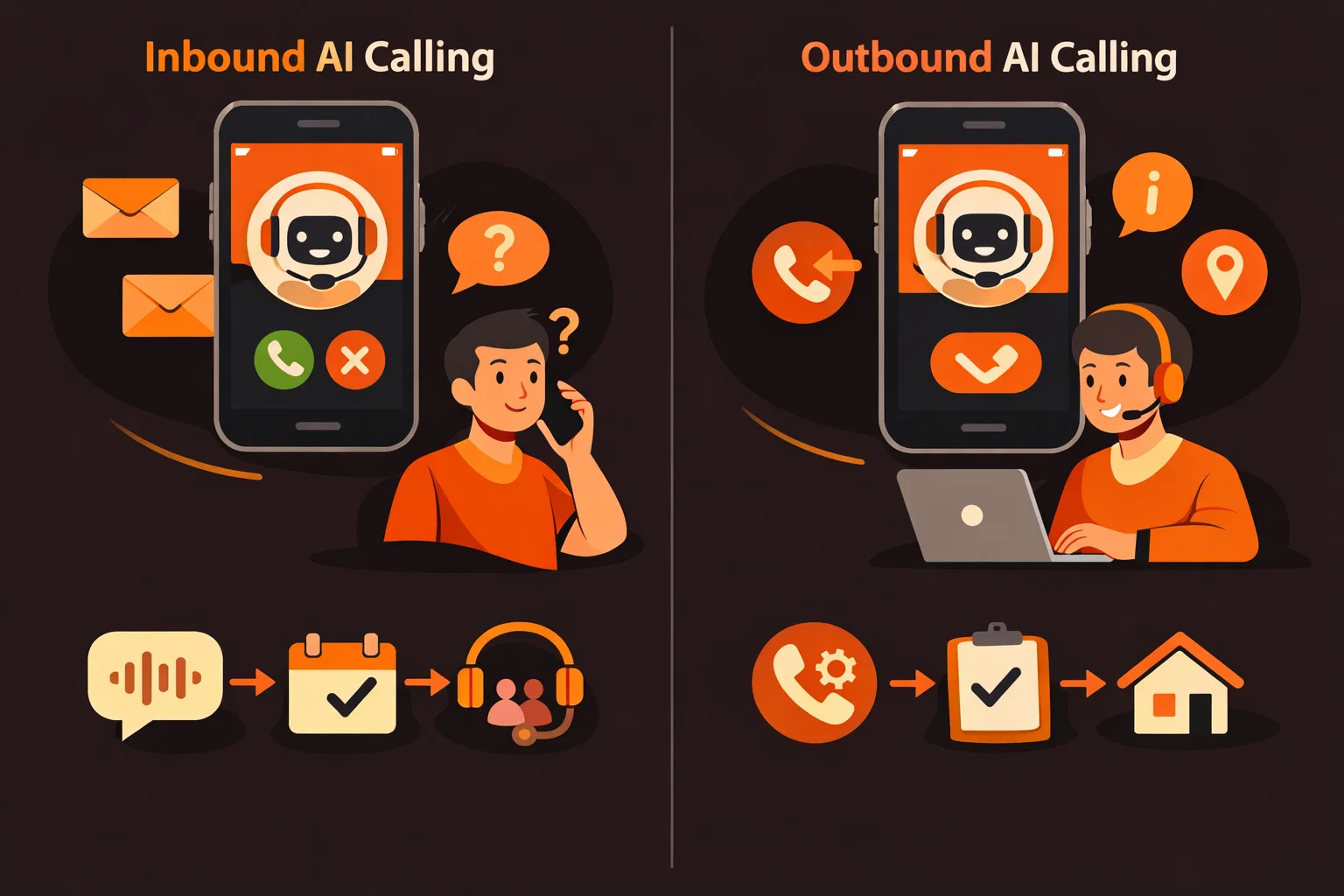
Inbound AI calling focuses on handling incoming calls from customers, prospects, or partners. Instead of a human receptionist or support agent answering calls, an AI voice assistant handles them automatically.
Inbound AI calling can:
- Answer calls instantly
- Greet callers professionally
- Respond to common questions
- Route calls based on intent
- Book or reschedule appointments
- Escalate calls to humans when needed
Think of inbound AI calling as a smart virtual receptionist that works 24/7.
When Inbound AI Calling Makes Sense
Inbound AI calling is ideal if your business:
- Receives frequent phone inquiries
- Misses calls outside business hours
- Handles repetitive customer questions
- Books appointments or consultations
- Wants to reduce support workload
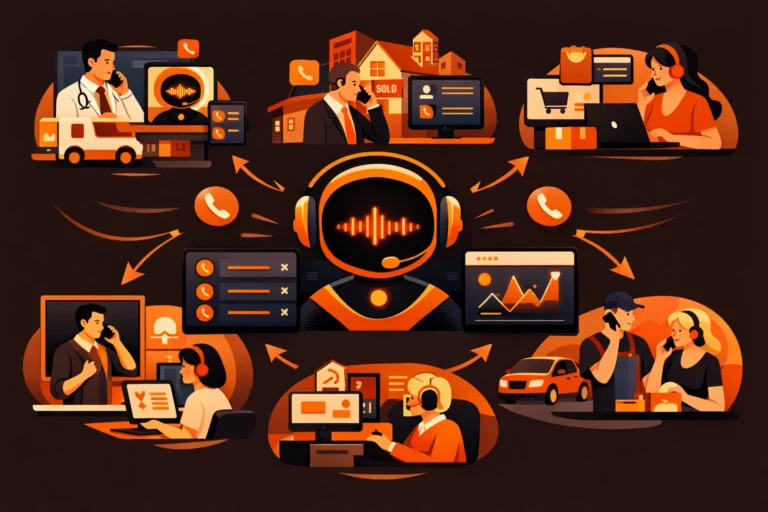
Industries that benefit heavily from inbound AI calling include healthcare, real estate, service businesses, e-commerce, and local businesses.
Benefits of Inbound AI Calling
1. Never Miss Another Call
Every missed call is a missed opportunity. Inbound AI ensures every call is answered instantly, even during weekends or after hours.
2. Improved Customer Experience
Customers get immediate responses instead of waiting on hold. AI can guide them smoothly to the right solution or department.
3. Reduced Support Costs
AI handles repetitive calls, allowing human agents to focus on complex issues instead of basic queries.
4. Consistent Communication
AI follows predefined scripts, ensuring accurate and consistent responses every time.
What Is Outbound AI Calling?
Outbound AI calling focuses on making calls to customers or leads automatically. Instead of your team manually dialing numbers, AI handles outreach at scale.
Outbound AI calling can be used for:
- Lead follow-ups
- Appointment reminders
- Payment reminders
- Promotions and offers
- Surveys and feedback collection
Outbound AI calling is proactive, not reactive.
When Outbound AI Calling Makes Sense
Outbound AI calling is perfect if your business:
- Generates leads regularly
- Needs faster follow-ups
- Sends appointment reminders
- Runs campaigns or promotions
- Collects customer feedback
Sales-driven businesses, agencies, clinics, and service providers often rely heavily on outbound AI calling.
Benefits of Outbound AI Calling
1. Faster Lead Follow-Ups
Speed is critical in sales. AI can call leads instantly after they submit a form, increasing conversion chances.
2. High-Volume Outreach Without Extra Staff
AI can make hundreds or thousands of calls without fatigue, delays, or hiring additional agents.
3. Automated Reminders and Notifications
AI reduces no-shows by sending timely reminders through voice calls.
4. Data Collection at Scale
Outbound AI can ask structured questions and record responses, making it easy to collect insights and feedback.
Inbound vs Outbound AI Calling: Key Differences
| Feature | Inbound AI Calling | Outbound AI Calling |
|---|---|---|
| Purpose | Handle incoming calls | Make outgoing calls |
| Primary Use | Support, reception, booking | Sales, follow-ups, reminders |
| Customer Action | Customer initiates call | Business initiates call |
| Availability | 24/7 call handling | Scheduled or trigger-based |
| Best For | Support-heavy businesses | Growth and sales teams |
Which One Is Right for Your Business?
Choose Inbound AI Calling If:
- You receive a high volume of calls
- Customers often ask similar questions
- You want a 24/7 virtual receptionist
- Support efficiency is a priority
Choose Outbound AI Calling If:
- You rely on lead follow-ups
- Sales speed matters
- You need appointment reminders
- You run outreach campaigns
The Best Option: Using Both Together
For most businesses, the real power comes from combining inbound and outbound AI calling.
Together, they create a complete communication loop:
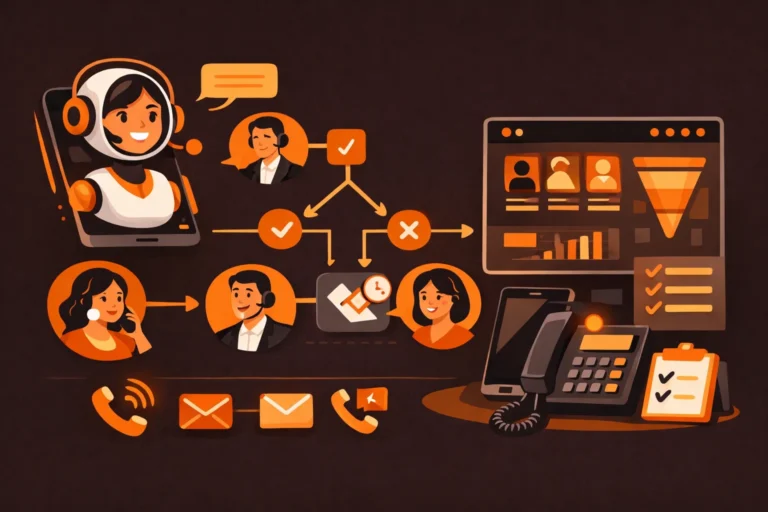
- Inbound AI captures and qualifies callers
- Outbound AI follows up automatically
- Sales teams receive only high-intent leads
- Support teams handle only complex issues
This hybrid approach delivers maximum efficiency and scalability.
How AI Calling Automation Stays Human-Friendly
A common concern is whether AI calls feel robotic. Modern AI calling systems are designed to sound natural and conversational.
They use:
- Human-like voice tones
- Context-aware responses
- Smart call logic
- Smooth call transitions
The result is a professional and comfortable experience for callers.
Compliance and Responsible Use
Whether inbound or outbound, businesses must follow local telecommunication and consent laws. AI calling automation works best when used ethically and responsibly.
Businesses should:
- Inform callers about AI usage
- Obtain required consent
- Follow regional calling regulations
Final Thoughts
Inbound and outbound AI calling serve different purposes, but both are powerful tools for modern businesses.
Inbound AI calling improves responsiveness and customer experience.
Outbound AI calling accelerates sales, follow-ups, and engagement.
The right choice depends on your goals—but for most businesses, combining both creates a scalable, cost-effective, and future-ready communication system.
AI calling automation isn’t about replacing humans. It’s about helping businesses communicate smarter, faster, and better.